Contents:
- A Brief History of Short Hair Culture
- Understanding Your Short Hair Type and Structure
- Hair Texture and Wave Pattern
- Hair Density and Porosity
- How to Style Short Hair for Different Texture Types
- Styling Straight Short Hair
- Styling Wavy Short Hair
- Styling Curly Short Hair
- Styling Coily Short Hair
- Essential Styling Techniques for How to Style Short Hair
- Blow-Drying Fundamentals
- Using a Straightener or Curling Iron
- Hand-Styling and Texturising Techniques
- Product Recommendations and Cost Breakdown
- Budget-Conscious Routine (£20–35 total investment)
- Mid-Range Routine (£45–75 total investment)
- Premium Routine (£100–150 total investment)
- What the Pros Know
- Styling Short Hair for Different Face Shapes
- Round Face Shapes
- Oval Face Shapes
- Square Face Shapes
- Heart-Shaped Faces
- Rectangular Face Shapes
- Solutions for Common Short Hair Challenges
- Frizz and Flyaways
- Lack of Volume
- Difficulty Achieving Wave or Curl Definition
- Uneven Growth and Awkward Phases
- Styling Short Hair for Specific Occasions
- Professional or Business Settings
- Casual and Weekend Styles
- Evening or Event Styling
- Refresh Styling Between Washes
- Frequently Asked Questions About How to Style Short Hair
- How often should I wash short hair?
- What products do I absolutely need for short hair?
- Can I blow-dry short hair without a brush?
- How do I prevent short hair from looking childish?
- What’s the difference between a pixie cut and a boy cut?
- Moving Forward with Your Short Hair Style
A Brief History of Short Hair Culture
Short hair has punctuated the narrative of fashion and identity for more than a century. In the 1920s, the “bob” revolutionised women’s style as a symbol of liberation and modernity. Yet before that, short cuts were primarily the domain of practical necessity—military regulations, workplace hygiene, or simply the default before modern styling tools existed. Today, the choice to wear short hair remains deeply personal. It may express individuality, practicality, or aesthetic preference. What connects all these moments is this: short hair demands intentionality. You cannot rely on length to do the work. Instead, styling becomes the art of understanding your hair’s natural behaviour and working with it rather than against it.
Understanding Your Short Hair Type and Structure
Before learning how to style short hair effectively, you must first understand what you’re working with. Short hair magnifies texture—both its strengths and challenges. Every curl, wave, and strand becomes visible. A bob that works beautifully on wavy hair may appear limp on straight hair, and vice versa.
Hair Texture and Wave Pattern
Your hair’s natural texture forms the foundation of every styling choice. Straight hair (classified as Type 1) tends to sit flat against the scalp, particularly fine or thin varieties. Wavy hair (Type 2) has a gentle S-pattern with natural movement. Curly hair (Type 3) forms defined spiral loops. Coily hair (Type 4) has tightly wound texture with significant shrinkage potential—a 12-inch coily cut can shrink to 7 inches when dry.
Identifying your type matters because the products and techniques that work for straight hair can actually weigh down curls. Conversely, styling methods designed for curls may make straight hair appear frizzy or unkempt.
Hair Density and Porosity
Short hair also reveals your hair’s density—how many strands grow per square inch of scalp. Fine density hair (approximately 50–100 hairs per square inch) requires volumising products and careful handling. Medium density (100–150 hairs per square inch) is the most forgiving. Thick density (150+ hairs per square inch) often benefits from texturising products to reduce bulk.
Porosity—your hair’s ability to absorb and retain moisture—equally shapes styling outcomes. Low-porosity hair resists moisture absorption and product penetration. High-porosity hair absorbs moisture quickly but struggles to retain it. Medium-porosity hair sits between these extremes. Understanding your porosity helps you choose products that actually work. High-porosity curls typically need heavier leave-in conditioners; low-porosity hair benefits from lighter products to prevent buildup.
How to Style Short Hair for Different Texture Types
Styling Straight Short Hair
Straight hair’s main challenge in a short cut is avoiding flatness. Volume comes from three sources: product, blow-drying technique, and cut shape.
Begin with a volumising shampoo and lightweight conditioner applied only to the ends. After showering, rough-dry your hair using a microfibre towel or cotton t-shirt rather than a regular towel—this reduces friction and frizz. Apply a volumising mousse or thickening spray to damp roots before blow-drying.
For blow-drying, use a ionic hair dryer set to medium heat. Direct the nozzle against the direction of your hair growth, lifting roots upward. Aim for 80–90% dryness using this technique. Finish with a paddle brush and cool air shot to seal the cuticle and enhance shine. The entire process takes approximately 8–12 minutes for a short cut.
For texture, a texturising spray applied to damp roots and blow-dried in creates deliberate movement. Products like dry shampoo (applied strategically, not everywhere) add grip and separation between strands. Avoid heavy pomades or oils, which flatten straight hair immediately.
Styling Wavy Short Hair
Wavy hair in a short cut can look either beautifully tousled or rather undone, depending on technique. The goal is enhancing natural waves without over-defining them.
Start with a curl-enhancing shampoo and a hydrating conditioner. Apply a leave-in conditioner to damp hair—wavy textures need moisture, not heat. Instead of blow-drying straight, try the “praying hands” method: apply a curl cream or wave cream between your palms and smooth it through hair in the direction your waves naturally fall.
For waves without a diffuser, scrunch product upward into sections, then allow air-drying. If time is limited, use a diffuser attachment on your blow dryer set to low heat. Cup sections of hair in the diffuser and hold for 10–15 seconds, releasing without twisting. This method encourages wave formation without disruption.
Finishing texture spray or light gel can define individual waves and extend hold throughout the day. Expect this style to last 1–2 days before refreshing with water and reapplying product.
Styling Curly Short Hair
Short curly hair is perhaps the most transformative style choice. Curl patterns become more pronounced and bouncy with less weight pulling them down.
Curly hair requires a dedicated routine. Shampoo with a sulfate-free curl shampoo or co-wash (conditioner washing) every 7–10 days; between washes, wet hair lightly and apply conditioner without full shampoo. Apply a leave-in conditioner to soaking-wet hair, distributing evenly. Layer a curl cream or gel on top.
For styling, apply products to very wet hair using the praying hands method or by scrunching sections upward. A microfibre towel or cotton t-shirt can absorb excess water without disrupting curls. Air-dry or use a diffuser on low heat, holding sections for 15–20 seconds each. This typically takes 30–45 minutes for a short cut.
Gel-cast hair—where a hard gel cast forms as hair dries—is normal. Once completely dry, gently scrunch out the crunch with hands to reveal soft, voluminous curls underneath. This process is called “scrunching out the crunch” and takes roughly 2 minutes.
Styling Coily Short Hair
Coily hair in a short cut presents unique texture and volume—sometimes dramatic volume, due to shrinkage. A 4-inch coily cut can appear 2 inches when dry if texture isn’t managed.
Moisture is paramount. Use a moisturising shampoo or co-wash, then generously apply leave-in conditioner and a creamy styler (curling cream or pudding, not thin gels). Apply products to soaking-wet hair and style using finger coils (wrapping small sections around your finger), braiding out sections, or simply distributing product and allowing natural coil formation.
Drying takes time with coily textures. Air-drying can require 4–8 hours. A diffuser speeds this to 60–90 minutes. Some people find bonnets or pineapple methods (loosely gathering hair on top of the head with a silk scrunchie) helpful for overnight drying or refreshing the next day.
Maintenance between washes involves daily or every-other-day light water spraying and product reapplication. The investment in time is significant but the result—defined, bouncy coils—is striking.
Essential Styling Techniques for How to Style Short Hair
Blow-Drying Fundamentals
Blow-drying technique matters enormously in short styles. The directional approach—drying roots upward, then sides against the scalp, then ends—creates lift and shape. Always work in sections. Use clips to separate hair into four quadrants. Dry the nape and lower back first, then sides, then crown, then fringe if applicable.
The nozzle should always point downward (toward the ends) to smooth the cuticle and enhance shine. Rough-drying (drying without a brush to 60% moisture) takes 3–4 minutes; fine-drying (with a brush for shape) takes another 5–8 minutes.
Using a Straightener or Curling Iron
For sleek styles, a 1-inch flat iron glides through short hair quickly. Work on one-inch sections, applying heat for 2–3 seconds. For waves or curls, a 0.75-inch or 1-inch barrel waver creates S-pattern texture in minutes. Section, clamp, hold for 3 seconds, release, and repeat along the hair shaft.
Temperature matters. Fine hair needs 300–330°F (150–165°C). Medium hair tolerates 330–370°F (165–190°C). Thick hair can handle 370–410°F (190–210°C). A heat protectant spray applied before any heat styling reduces damage risk by up to 40% according to dermatological studies.
Hand-Styling and Texturising Techniques
Many short styles don’t require heat tools at all. Hand-styling with fingers and product creates natural, textured looks. Apply mousse to damp hair, then scrunch sections upward with your hands as you air-dry. This works for wavy and curly textures especially.
For separating pieces, use fingers or a fine-tooth comb to rake through the style after products have dried. A clay or matte pomade worked through specific sections creates intentional piece-separation without heavy shine.
Product Recommendations and Cost Breakdown
Building a short-hair routine doesn’t require an expensive arsenal, but strategic choices make a difference.
Budget-Conscious Routine (£20–35 total investment)
- Shampoo (£3–5): A basic volumising or curl-specific shampoo. Brands like Superdrug’s B. Curl or Tesco’s F&F range work well.
- Conditioner (£3–5): A lightweight leave-in or rinse-out conditioner. Good budget options include Cantu or SheaMoisture.
- Styling product (£5–8): Either a mousse (straight hair) or curl cream (wavy/curly hair). Basic gel from any drugstore functions adequately.
- Heat protectant spray (£3–5): Any heat spray from Superdrug, Boots, or Asda protects against damage.
- Dry shampoo (£2–4): Extends time between washes and adds texture.
This covers basic weekly styling needs for 2–3 months.
Mid-Range Routine (£45–75 total investment)
- Shampoo (£7–10): A professional-quality shampoo like Bumble and bumble or Olaplex. More concentrated; a bottle lasts 3–4 months.
- Conditioner (£7–10): A targeted conditioner matching your hair type—curl-specific, strengthening, or moisturising.
- Leave-in conditioner (£8–12): Dedicated leave-in products rather than adaptations of rinse-outs.
- Styling product (£10–15): A quality mousse, curl cream, or gel with better hold and reduced frizz.
- Heat protectant (£5–8): A quality brand with beneficial ingredients like keratin or argan oil.
- Texturising spray or sea salt spray (£7–10): For adding grip and wave definition.
Premium Routine (£100–150 total investment)
- Professional shampoo and conditioner sets (£25–40): Brands like Dyson Supersonic or Kevin Murphy offer salon-quality results.
- Specialised treatments (£15–25): Weekly masks or protein treatments for damaged hair.
- Multiple styling products (£40–50): Separate products for different styling methods—mousse, gel, cream, spray—allowing flexibility.
- Advanced heat tools (£50–100): A professional ionic blow dryer or ceramic straightener that heats evenly and reduces frizz.
Premium investments pay off over 6–12 months through reduced breakage, better hold, and faster styling times.
What the Pros Know
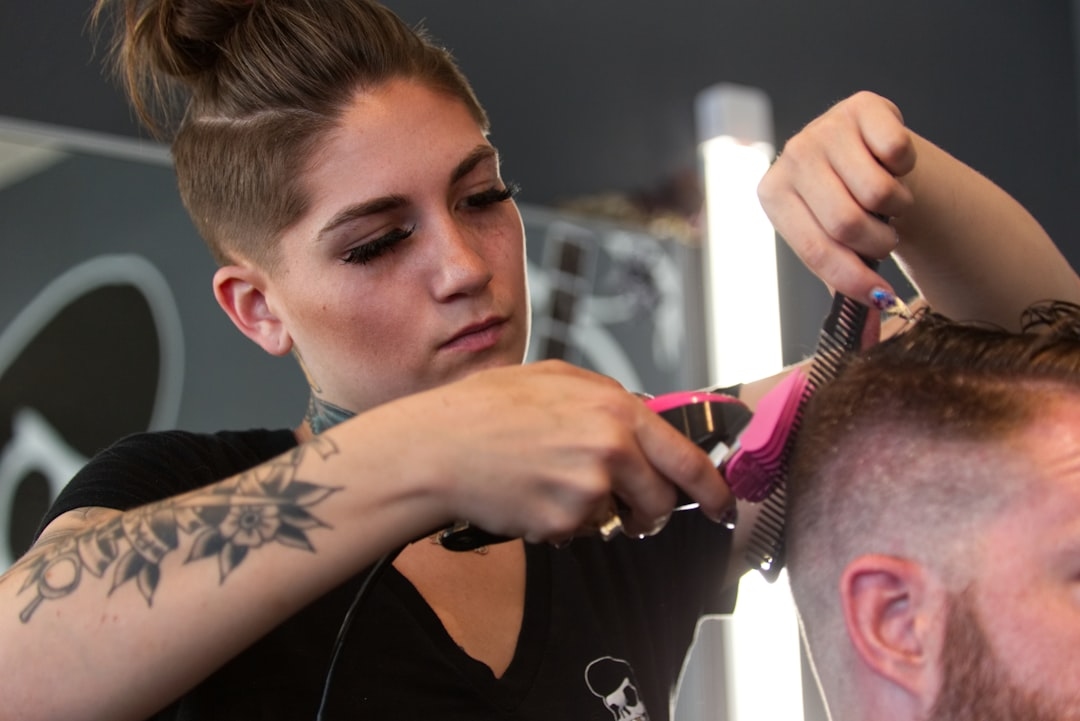
Professional stylists understand that short hair requires a sharp cut every 4–6 weeks to maintain shape. Unlike longer hair where roots grow unnoticed, short cuts show every millimetre of new growth. A “maintenance cut” every 6 weeks costs roughly £25–50 depending on your salon. Yes, this seems frequent. However, consider that a poorly maintained short cut looks unkempt within weeks, whereas a well-maintained short cut looks intentional and polished for the entire 4–6 week cycle. Investing in regular trims keeps styling effort minimal—a well-cut short style often looks good with just running fingers through it.
Additionally, professionals prioritise cut shape during styling decisions. No amount of product or heat styling fixes a cut that doesn’t suit your face shape or hair texture. A stylist considers your face proportions, hair density, and natural growth patterns when cutting. Working with a cut (rather than against it with excessive styling) makes daily styling genuinely effortless.
Styling Short Hair for Different Face Shapes
Round Face Shapes
Round faces benefit from styles that create vertical lines and height at the crown. Styles with height at the top and tapered sides visually elongate the face. Avoid styles that are rounded all over, as these emphasise the face’s width.
Oval Face Shapes
Oval faces are versatile. Most short styles work well with an oval face shape. Experiment freely—you’ll likely find many options flattering.
Square Face Shapes
Square faces have prominent jawlines and foreheads. Soft, wavy textures and side-swept fringes soften angular features. Styles with movement and texture rather than blunt lines are most flattering.
Heart-Shaped Faces
Heart-shaped faces have wider foreheads and narrower chins. Styles with volume at the chin area (longer layers around the face) balance proportions. Fringes can minimise forehead prominence.
Rectangular Face Shapes
Rectangular faces appear longer and narrower. Styles with fullness at the sides, waves, or textured layers create width. Avoid severely sleek styles that emphasise length.
Solutions for Common Short Hair Challenges
Frizz and Flyaways
Short hair offers less weight to anchor flyaways, making frizz a common complaint. A lightweight serum applied to damp hair before styling reduces surface frizz by approximately 50%. Additionally, a microfibre towel (rather than cotton) reduces friction damage. For existing flyaways, a small amount of pomade rubbed between your palms and smoothed over the surface tames them without creating greasiness.
Lack of Volume
Fine or flat hair needs strategic product and technique. Volumising mousse applied to roots before blow-drying creates lift. A blow dryer with ionic technology reduces frizz whilst adding volume. A teasing brush at the crown creates sustained height. Textured products like clay or dry shampoo add grip without heaviness. Layer several light products rather than one heavy one.
Difficulty Achieving Wave or Curl Definition
Straight hair naturally resisting texture needs products designed to hold shape. Gels and mousses work better than creams, which emphasise straightness. Using a diffuser on a blow dryer (rather than concentrating heat on one spot) creates more consistent texture. Allowing hair to fully air-dry after product application improves hold. Some people find braiding out sections overnight, then releasing them, creates more durable waves than heat styling alone.
Uneven Growth and Awkward Phases
Short hair grows approximately 0.5 inches per month. Between cuts, awkward phases are inevitable. Styling strategically disguises growth. Side-part placement can hide uneven length. Textured products distract from shape changes. Frequent trims prevent the awkward stage from becoming extreme.
Styling Short Hair for Specific Occasions
Professional or Business Settings
Professional short styles prioritise polish and grooming. Sleek, blown-out styles or neatly defined texture work best. Avoid wet-look gels or overly tousled styles unless your workplace is exceptionally casual. A light hairspray holds shape through an 8-hour workday without visible buildup.
Casual and Weekend Styles
Casual settings allow more experimentation. Tousled, textured, or piece-separated styles feel relaxed and approachable. Dry shampoo texturising sprays are your friends here—they add grip and movement instantly.
Evening or Event Styling
Evening styles can be more dramatic. Sleek, wet-look gels create a polished appearance. Subtle waves or curls created with a waver add movement and sophistication. A side part and tucked-back styling with bobby pins creates an understated elegant look. For more drama, a full texture spray creates intentional, voluminous texture that photographs well.
Refresh Styling Between Washes
Short hair can often go 2–3 days between full washes with proper refresh methods. Refresh sprays (waterless shampoos) absorb oils and revive texture. Lightly misting hair with water and reapplying styling product restores definition in wavy or curly styles. Dry shampoo adds texture and grip, especially to roots. For straightened styles, quickly running a straightener over pieces restores the sleek finish.
Refresh styling extends the life of your style and reduces washing frequency, which is beneficial for hair health. Most people find that 2–3 weekly washes (with 2–3 refresh days between) strikes a balance between cleanliness and hair health.
Frequently Asked Questions About How to Style Short Hair
How often should I wash short hair?
Most people find washing short hair 2–3 times weekly works best. Shorter styles show oil faster than longer hair, so frequent washing feels necessary. However, washing too frequently strips natural oils, making hair drier. Co-washing (conditioning only) on off-days reduces drying. Between washes, dry shampoo absorbs oils and extends cleanliness another day or two.
What products do I absolutely need for short hair?
At minimum: a shampoo suited to your hair type, a conditioner, and one styling product (mousse for straight hair, cream for wavy/curly hair). A heat protectant spray is essential if you use heat tools. Everything else—dry shampoo, texturising spray, serums—enhances styling but isn’t strictly necessary.
Can I blow-dry short hair without a brush?
Yes, rough-drying without a brush works fine, especially for textured styles. Simply direct heat upward from roots for volume, then allow air-drying or finish with fingers. A brush adds polish and control but isn’t mandatory, particularly if you’re aiming for a casual, textured result.
How do I prevent short hair from looking childish?
Short hair appears mature when it’s well-maintained and thoughtfully styled. A sharp cut every 4–6 weeks ensures it looks intentional rather than grown-out. Sleek finishes, defined texture, and sophisticated styling methods (side parts, tucked sections) feel more mature than very tousled or undone styles. Adding subtle dimension through colour or texture also enhances sophistication.
What’s the difference between a pixie cut and a boy cut?
A pixie cut typically features short length on top (1–3 inches) with tapered sides and back, usually with some styling or texture. A boy cut is typically more uniform in length throughout (0.5–2 inches), offering a more androgynous, cropped appearance. Both require regular trims to maintain shape but offer low daily styling effort once cut properly.
Moving Forward with Your Short Hair Style
Learning how to style short hair transforms it from a convenient choice into a deliberate expression. Understanding your hair’s texture, investing in cuts that complement your features, and building a simple routine aligned with your lifestyle creates a style that feels effortless yet polished.
Start with one good cut from a stylist experienced with short hair. Be specific about your lifestyle, styling preferences, and the amount of time you want to spend daily. Discuss your hair type openly—a stylist who understands your texture can suggest a cut that requires minimal styling. Then, experiment with one or two products at a time rather than overhauling your entire routine overnight. Short hair is wonderfully forgiving of experimentation. A product that doesn’t work can be washed out within hours; a technique that doesn’t suit you can be abandoned without consequence.
Return for maintenance cuts every 4–6 weeks, and don’t skip them. This single commitment determines whether your style looks intentional or neglected. The rest—the products, the techniques, the daily styling—flows naturally once you have a strong foundation. Short hair rewards attention to detail and consistency. Provide these, and you’ll find a style that genuinely works for your life.