Contents:
- Does Psoriasis Cause Hair Loss?
- How Scalp Psoriasis Damages Hair Growth
- Inflammation and Follicle Disruption
- Mechanical Damage from Scratching
- Secondary Infections
- When Does Hair Loss Occur?
- Treatment Options for Psoriasis-Related Hair Loss
- Topical Treatments
- Systemic Treatments
- Phototherapy
- Practical Steps to Minimise Hair Loss
- FAQ: Psoriasis and Hair Loss
- Is hair loss from psoriasis permanent?
- How long does it take to see improvement?
- Can I use regular shampoo if I have scalp psoriasis?
- Does diet affect psoriasis-related hair loss?
- Should I see a dermatologist?
- Moving Forward with Treatment
Most people assume psoriasis is purely a skin condition that affects the body’s surface. But here’s what many don’t realise: psoriasis on the scalp can absolutely trigger hair loss, and it’s far more common than you might think. The connection isn’t always straightforward, though, which is why understanding the mechanisms behind it matters for anyone dealing with this frustrating combination.
Does Psoriasis Cause Hair Loss?
Yes, can psoriasis cause hair loss — and the answer involves both direct and indirect pathways. Scalp psoriasis creates inflammation that disrupts the hair growth cycle, whilst the condition itself can lead to aggressive scratching, further damaging follicles. About 50% of psoriasis patients experience scalp involvement, and hair loss complications aren’t rare.
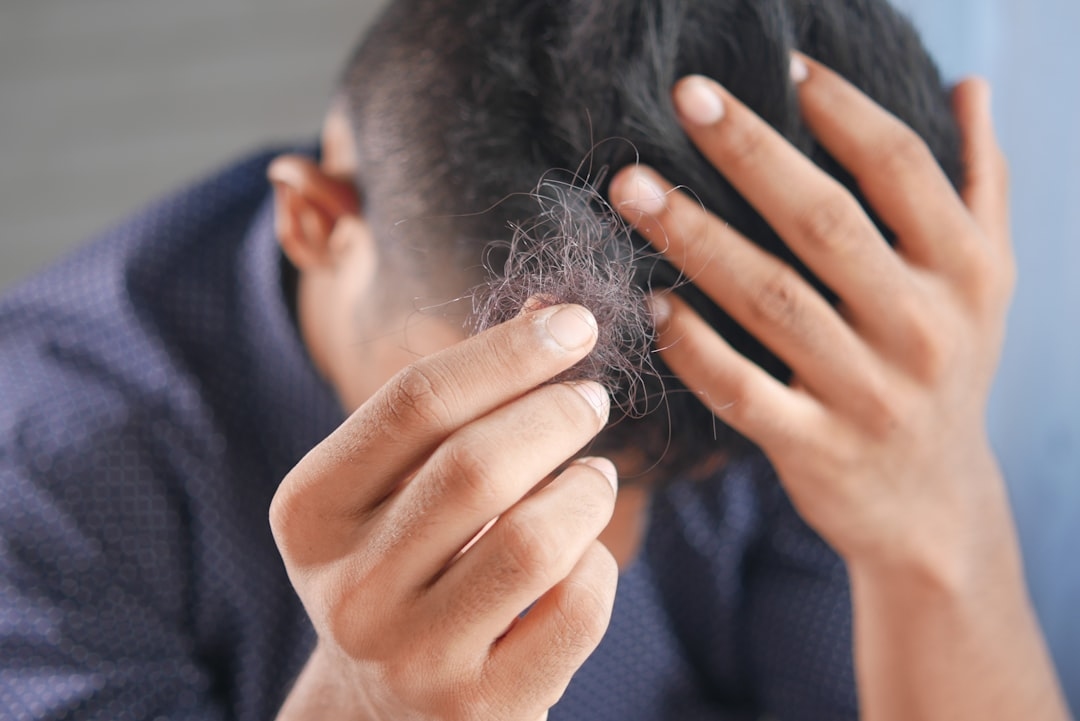
The inflammation associated with psoriasis triggers a condition called telogen effluvium, where hair prematurely enters the shedding phase. Normally, you shed 50 to 100 hairs daily as part of the natural cycle. During telogen effluvium triggered by scalp psoriasis, this number can jump to 200 to 300 hairs per day. The shedding typically becomes noticeable 2 to 3 months after the inflammatory event begins.
How Scalp Psoriasis Damages Hair Growth
Inflammation and Follicle Disruption
Psoriasis on the scalp creates a hostile environment for hair follicles. The immune system misfires, causing rapid skin cell turnover — approximately 10 times faster than normal. This inflammatory cascade produces thick, scaly plaques that cling to the scalp, blocking nutrient delivery to the hair roots.
The inflammation also shrinks blood vessels serving the follicles, reducing oxygen and nutrient circulation. A starved follicle can’t sustain healthy hair growth, leading to weakened strands that break more easily.
Mechanical Damage from Scratching
The itching associated with scalp psoriasis can be relentless. When you scratch, you physically damage the follicle, the hair shaft, and surrounding skin. This creates a painful cycle: scratching worsens inflammation, which increases itching, leading to more scratching. Over time, repeated trauma can cause scarring alopecia, where permanent follicle damage results in permanent hair loss.
Secondary Infections
Broken skin from scratching or plaques opening creates entry points for bacteria or fungi. Infections like bacterial folliculitis can destroy hair roots entirely. Even without infection, the body’s inflammatory response to psoriasis alone is often aggressive enough to disrupt the anagen phase (active growth phase) of hair.
When Does Hair Loss Occur?
Hair loss from scalp psoriasis typically follows a seasonal pattern. Many people experience flare-ups during autumn and winter months — roughly October through March in the UK — when reduced sunlight exposure and dry indoor heating exacerbate both conditions. Summer sun exposure actually helps many psoriasis sufferers due to the therapeutic effect of UV light on inflamed skin.
Hair shedding often appears 2 to 3 months after a psoriasis flare begins, which means peak shedding might occur in January or February even if your psoriasis worsened in November. This lag can make the connection feel less obvious, but tracking your scalp condition alongside hair loss patterns usually reveals the link.
Treatment Options for Psoriasis-Related Hair Loss
Topical Treatments
Topical corticosteroids remain the first-line treatment for scalp psoriasis. Products containing hydrocortisone (mild), clobetasone (moderate), or clobetasol (potent) directly reduce inflammation. Expect costs ranging from £3.50 to £15 per product depending on strength and brand. Apply these directly to plaques, typically once or twice daily for 2 to 4 weeks.
Salicylic acid preparations (£2 to £8) help soften and lift scales, improving penetration of other treatments. Coal tar products (£4 to £12) slow skin cell turnover and reduce inflammation, though they have a distinctive odour and can stain clothing.
Vitamin D analogues like calcipotriol (£6 to £12) work by regulating skin cell growth. Many dermatologists recommend combining a topical steroid with a vitamin D analogue for optimal results, rotating them throughout the week to minimise steroid use.
Systemic Treatments
For moderate to severe scalp psoriasis causing significant hair loss, systemic treatments address the underlying immune dysfunction. Methotrexate (costs vary, typically £15 to £35 monthly via NHS prescription) suppresses immune overactivity. Biologic agents like TNF-alpha inhibitors (infliximab, adalimumab) are more expensive but highly effective — typically £500 to £2,000 per month, though usually covered by NHS when criteria are met.
Phototherapy
UVB phototherapy (narrowband or broadband) targets psoriasis directly and is particularly effective for scalp involvement. Sessions cost £40 to £80 per appointment at private clinics, with 2 to 3 sessions weekly typically recommended. NHS provision is available but often involves longer waiting lists. UV treatment reduces inflammation and promotes hair regrowth simultaneously.
Practical Steps to Minimise Hair Loss
- Resist scratching: Easier said than done, but essential. Keep fingernails trimmed short, wear cotton gloves at night, and use anti-itch medications (menthol-based products cost £3 to £8).
- Use gentle hair care: Avoid tight hairstyles that put tension on weakened hair. Choose sulfate-free shampoos specifically formulated for sensitive or psoriatic scalps (£5 to £15).
- Moisturise the scalp: Psoriatic skin is dry skin. Apply emollients like coconut oil or prescription-strength scalp oils after showering. Hydrated skin itches less.
- Manage flares promptly: Early intervention prevents severe inflammation. Start treatments within days of noticing plaques, not weeks.
- Track patterns: Keep a simple log of psoriasis severity, hair shedding, and any triggers. This reveals whether your hair loss correlates with flares.
- Consider stress reduction: Stress triggers psoriasis flares in 70% of patients. Regular exercise, meditation, or counselling (NHS services typically free; private options £40 to £80 per hour) can help.
FAQ: Psoriasis and Hair Loss
Is hair loss from psoriasis permanent?
Not usually. Telogen effluvium triggered by psoriasis is reversible once inflammation is controlled. Hair typically regrows within 6 to 12 months of achieving psoriasis remission. However, scarring alopecia from severe scratching or infection can cause permanent loss, making early intervention critical.
How long does it take to see improvement?
Psoriasis plaques usually improve within 2 to 4 weeks of starting effective topical treatment. Hair regrowth takes longer — expect new growth within 3 to 6 months once the scalp has healed. Full density restoration may take 12 months.
Can I use regular shampoo if I have scalp psoriasis?
Regular shampoos often irritate psoriatic scalps further. Use gentle, fragrance-free options or medicated shampoos containing zinc pyrithione, salicylic acid, or ketoconazole. Avoid hot water (use lukewarm instead) and massage gently rather than scrubbing.
Does diet affect psoriasis-related hair loss?
Indirectly, yes. A diet rich in omega-3 fatty acids, antioxidants, and zinc supports both skin and hair health. Inflammatory foods may worsen psoriasis. Consider consulting a registered dietitian (typically £60 to £150 per session) if your psoriasis is severe or diet-related triggers are suspected.
Should I see a dermatologist?
Yes, if hair loss accompanies scalp psoriasis. A dermatologist can determine whether your shedding is telogen effluvium (likely to improve) or scarring alopecia (requiring urgent intervention). Early specialist input prevents permanent damage and accelerates effective treatment.
Moving Forward with Treatment
The relationship between psoriasis and hair loss is real but manageable. Controlling inflammation through appropriate treatments — whether topical, phototherapy, or systemic — addresses hair loss at its source. The key is consistency and prompt action during flare-ups. Scalp health improves measurably within weeks when effective treatments are applied, and hair regrowth follows naturally as inflammation subsides. If you’re experiencing both scalp psoriasis and hair loss, scheduling a dermatology consultation this spring or summer could set you up for healthier scalp and hair throughout 2026.